From Damascus to Marseille: Where Water Crosses the Map
Tiphaine Bedel and Walaa Hajali
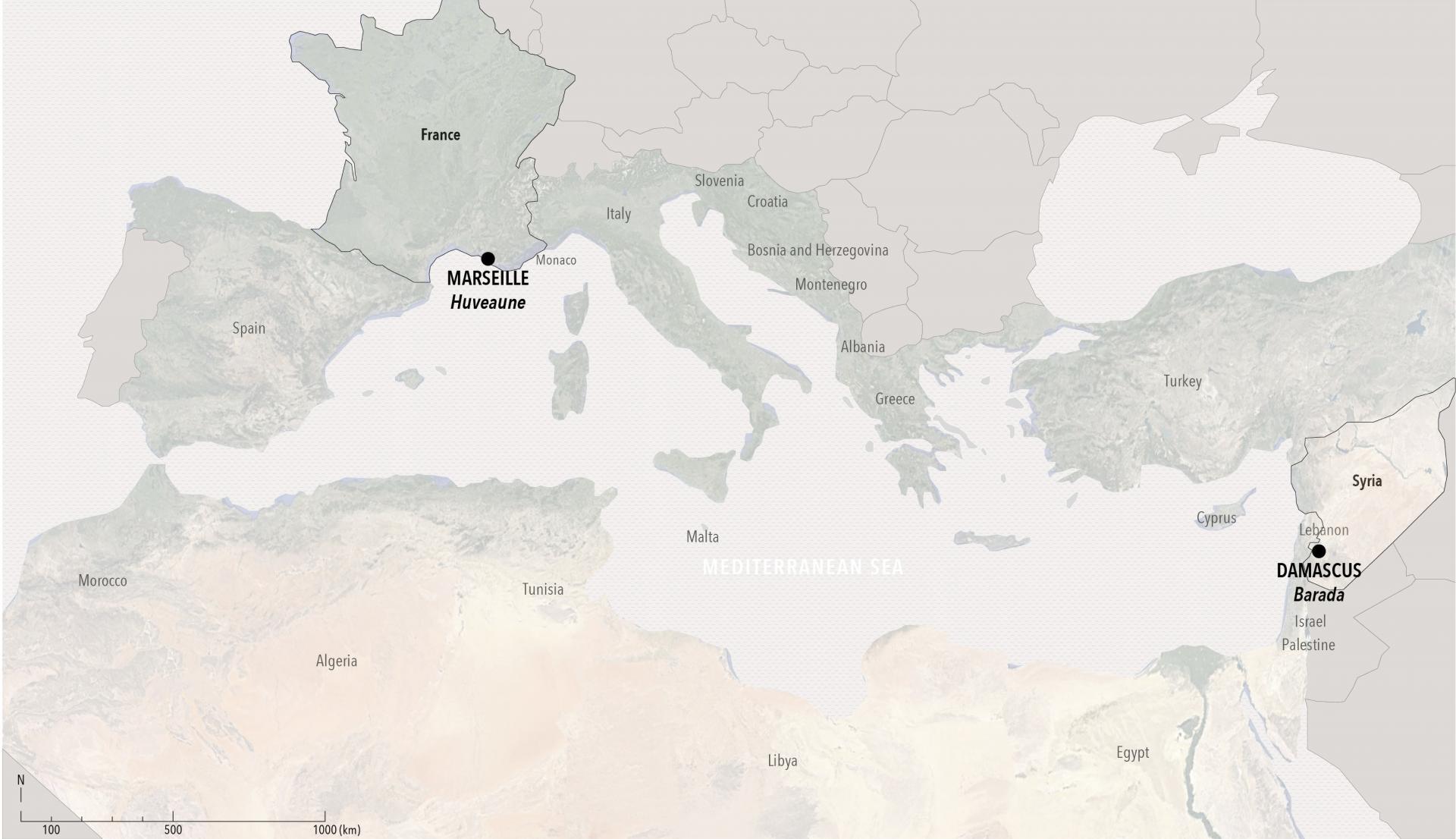
What do water systems share over different cities and realities? Marseille and Damascus, two cities located in two different countries, but both share the Mediterranean basin. Despite different contexts, they still share comparable hydraulic and climatic conditions shaped by scarcity, variable seasonal flow and long histories of urban settlement. What perspectives emerge then if we imagine water as a continuous surface beneath countries and follow the rivers of both cities in a single lens?
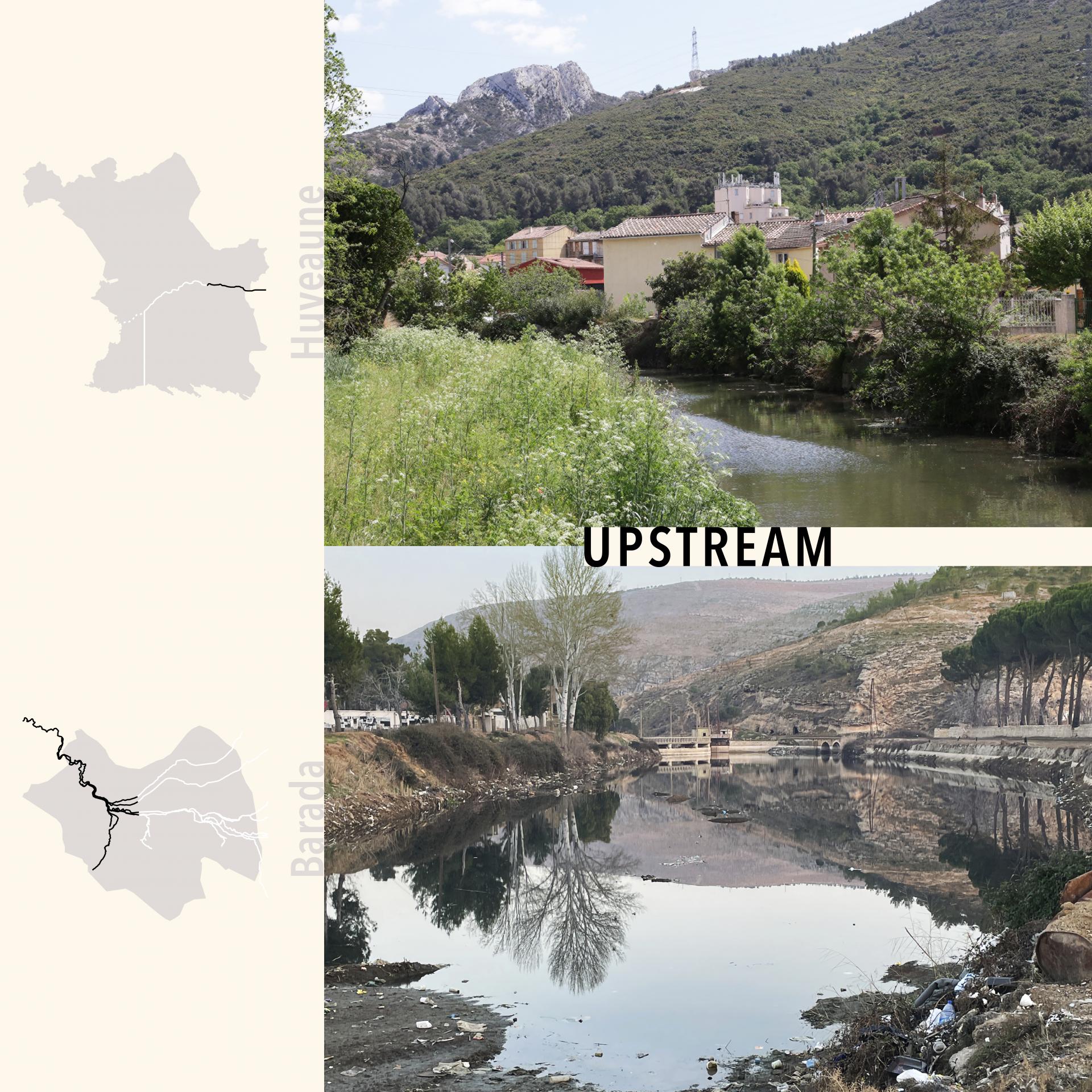
Through a parallel photographic reading of the Huveaune and Barada rivers from upstream to downstream, the rivers unfold as not simple watercourses, but socio-technical and ecological infrastructures through which forms of power and territorial organization become visible.
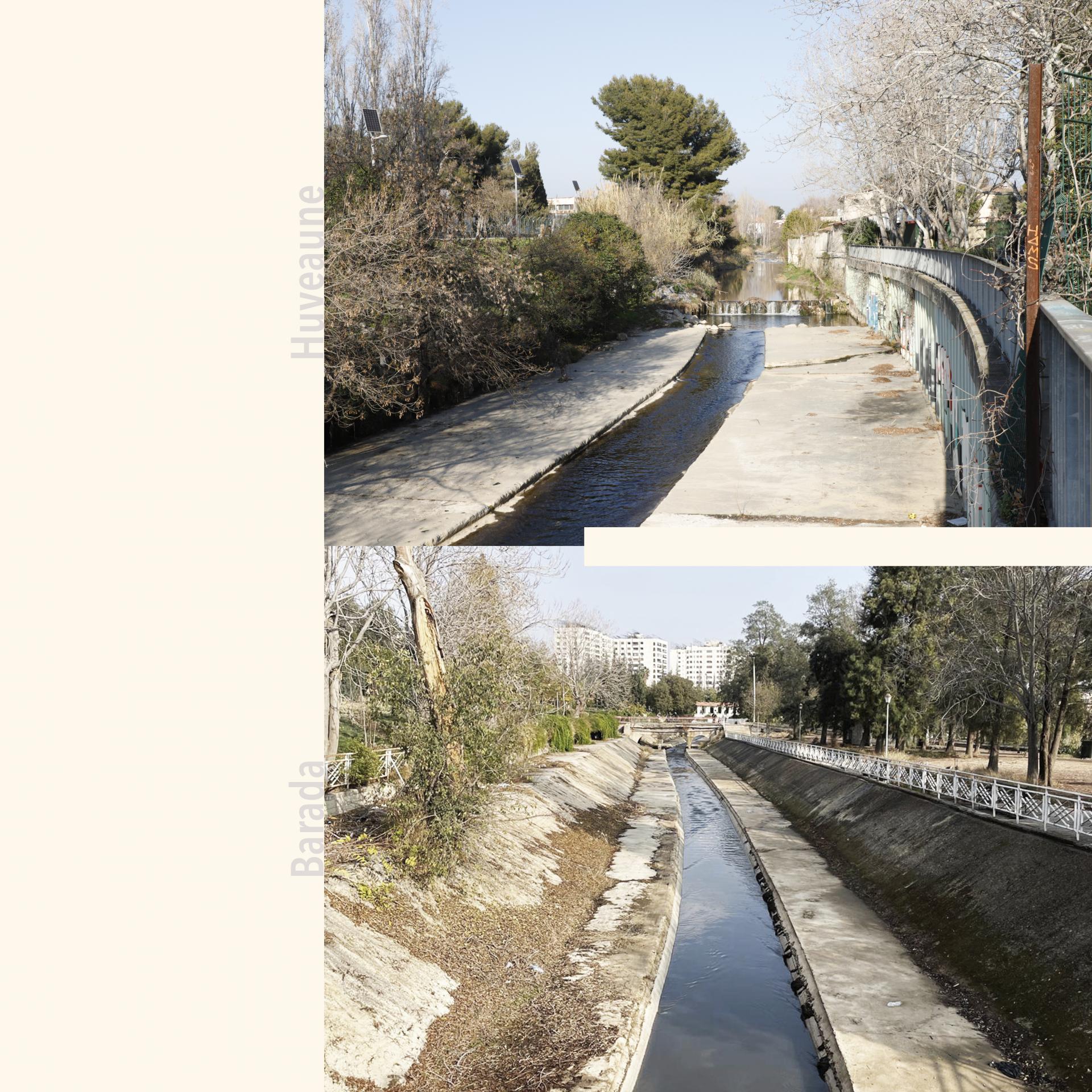
The river’s living continuity starts to be interrupted upstream. While industrial activities historically discharged waste directly into the Huveaune, particularly in the Aubagne area, Barada similarly suffers from wastewater discharge linked to recreational businesses and cafés along Wadi Barada. Together, they expose disruption as not singular but structurally reproduced through urban governance forms.
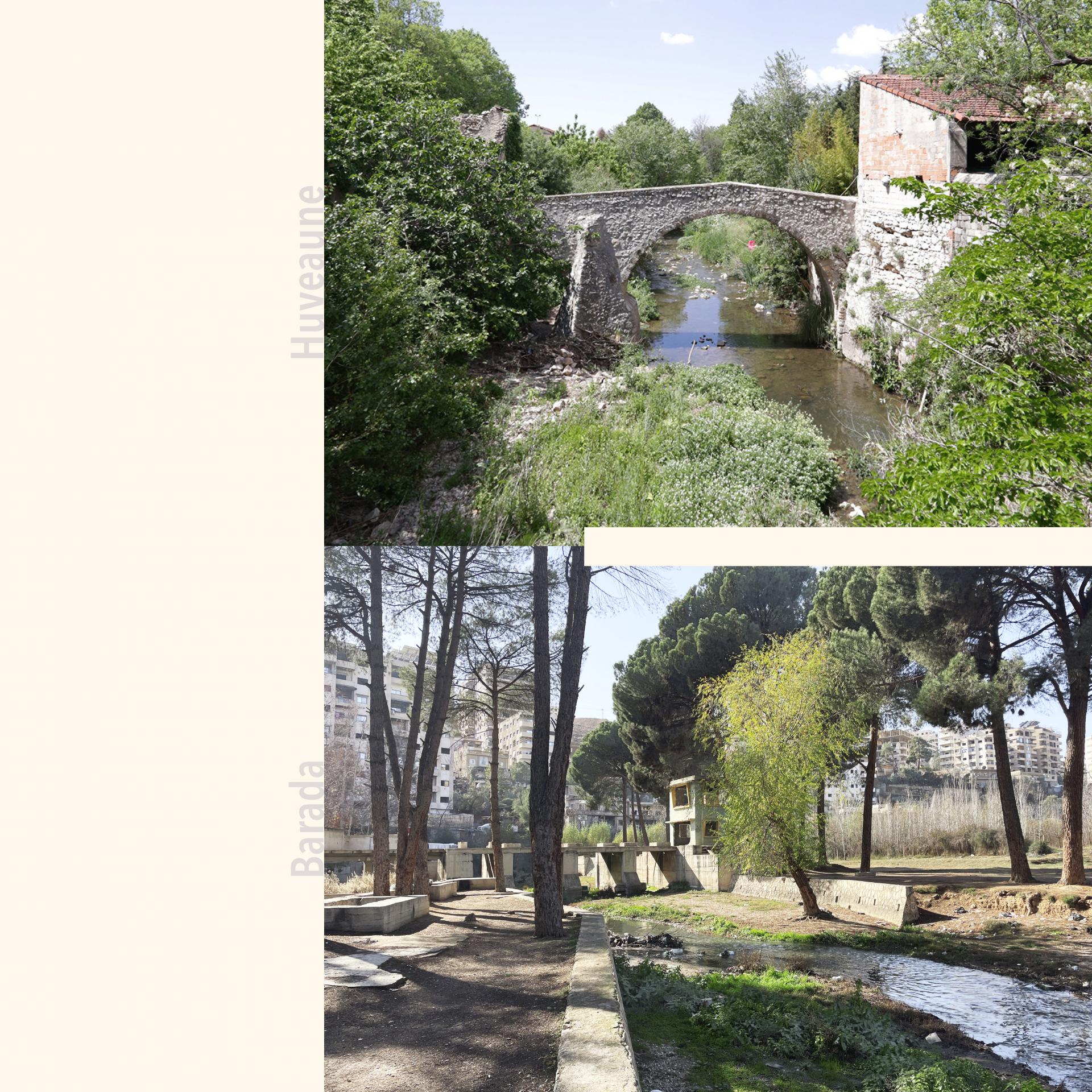
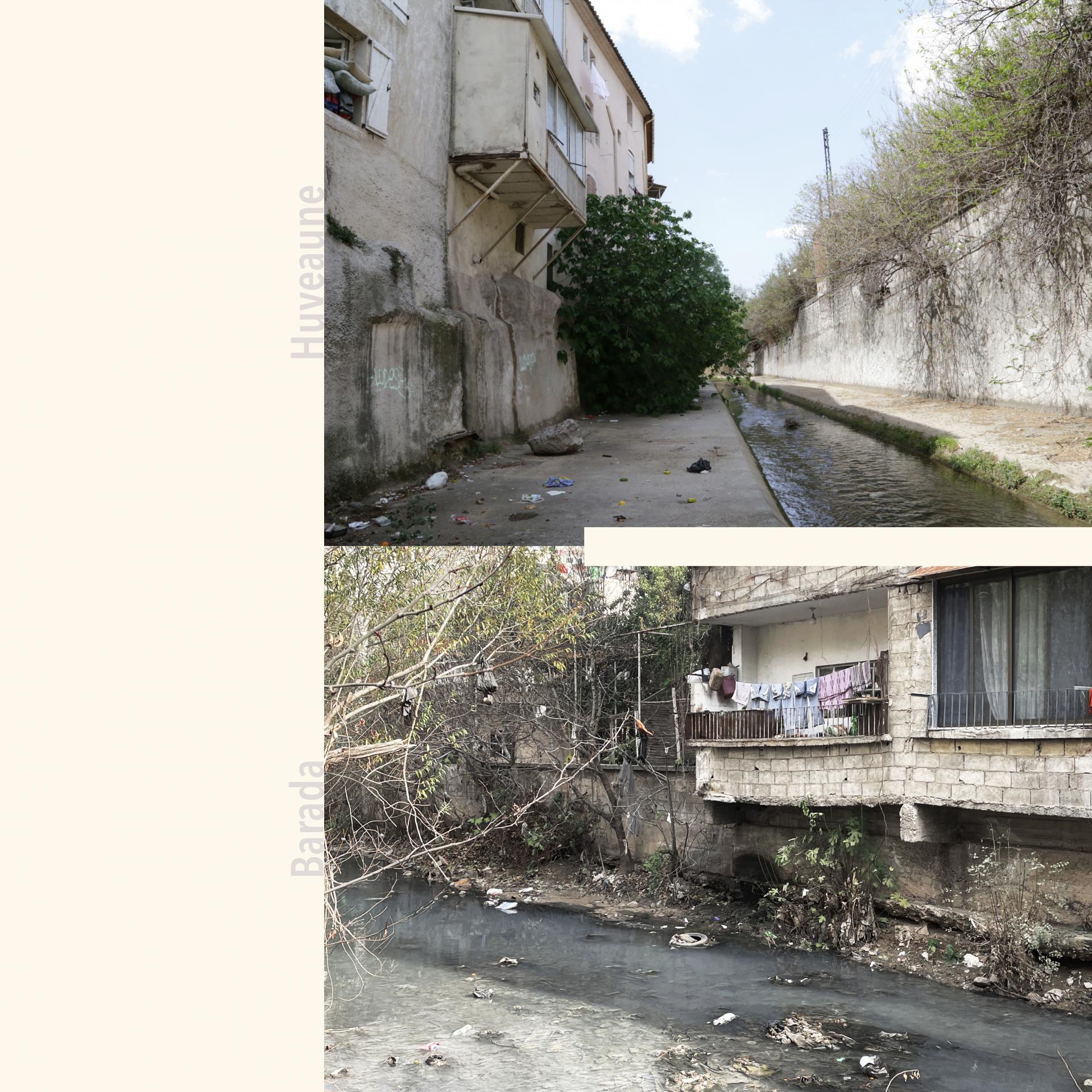
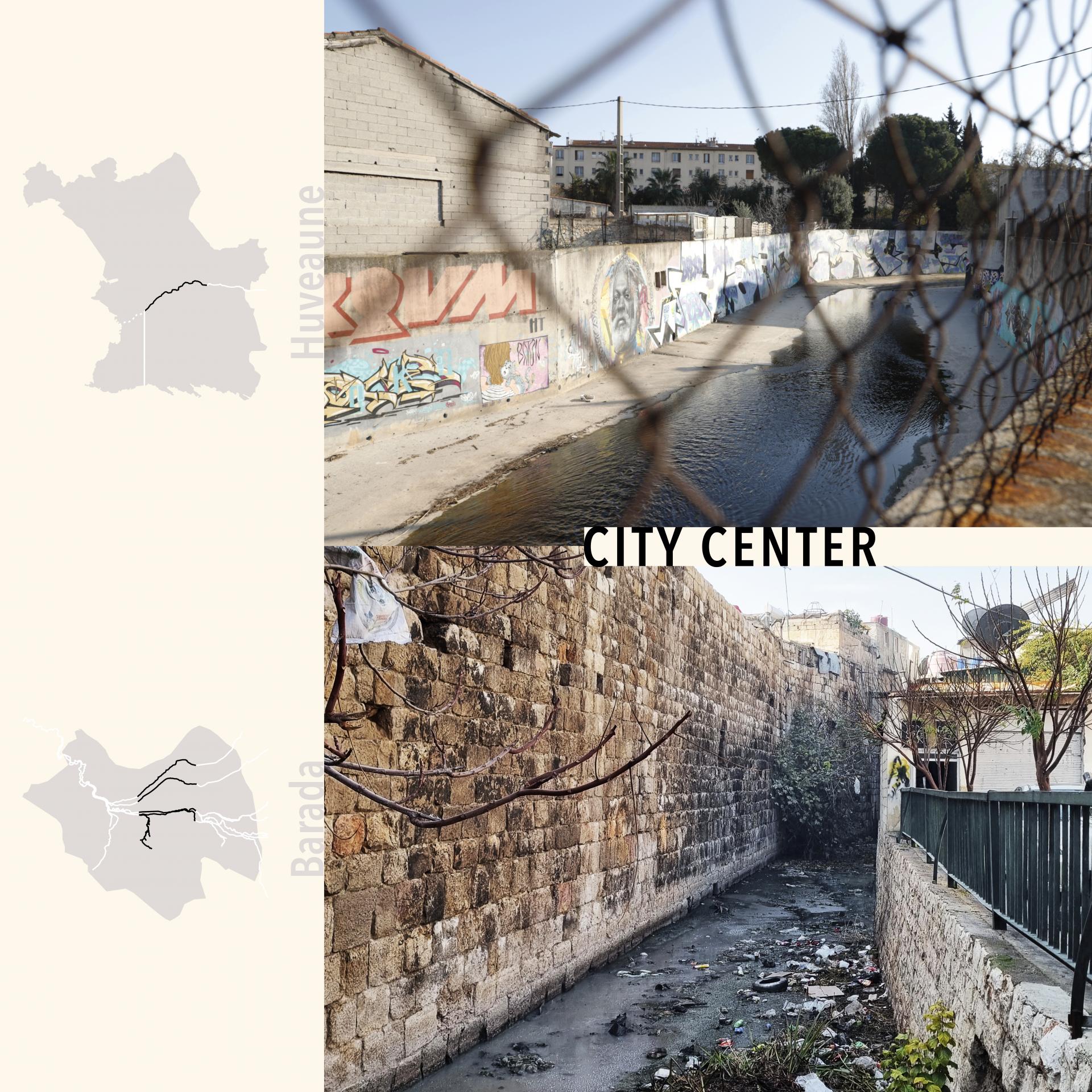
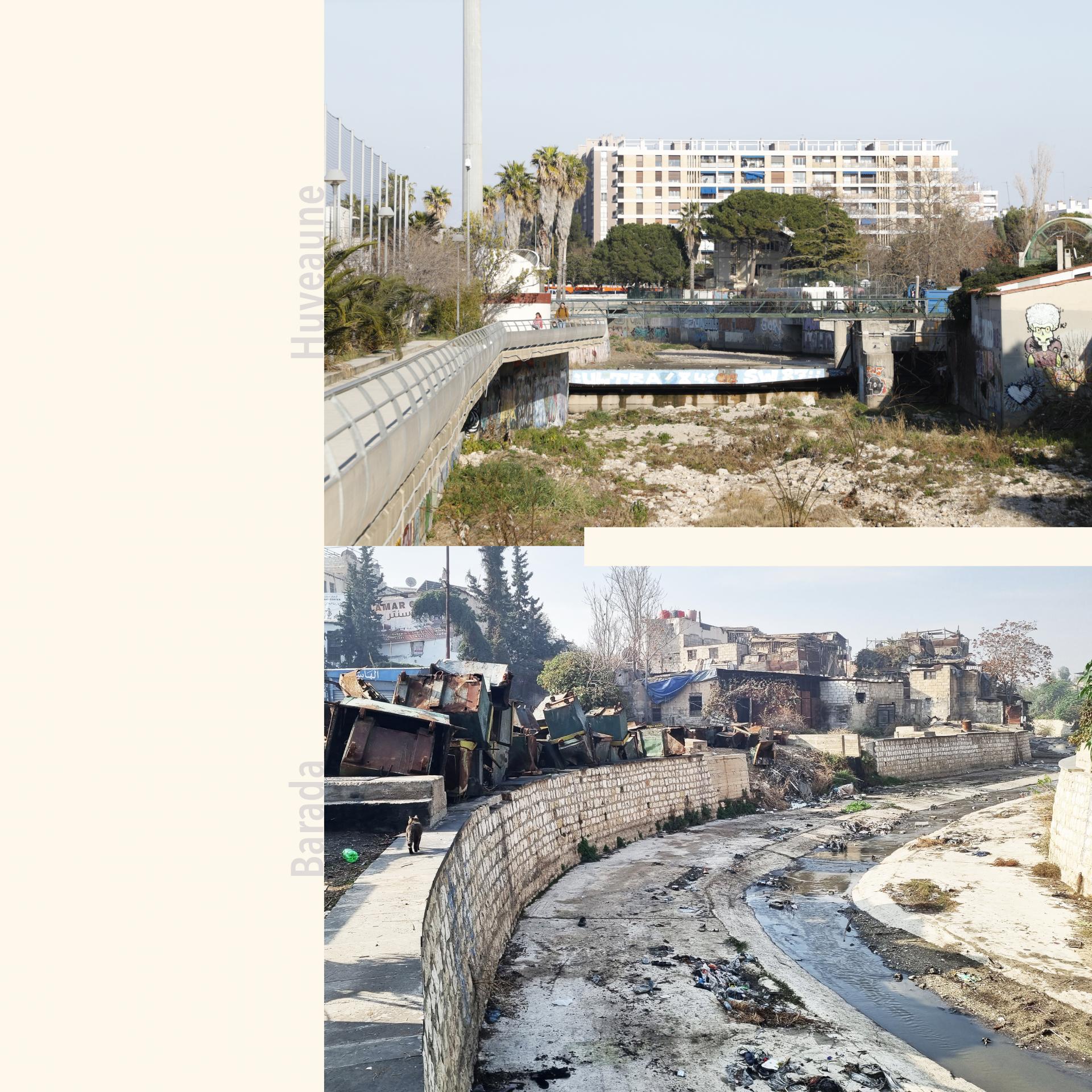
In the city center, the Huveaune river becomes hyper-controlled and largely invisible. Current responses largely rely on technical mitigation infrastructures: diversion systems, oversized retention basins, buried networks which often displace environmental pressures rather than resolving them. Across the urban core of Damascus, water becomes infrastructure and visibility is something secured within concrete boundaries, while the river is hidden in certain spaces as under urban networks.
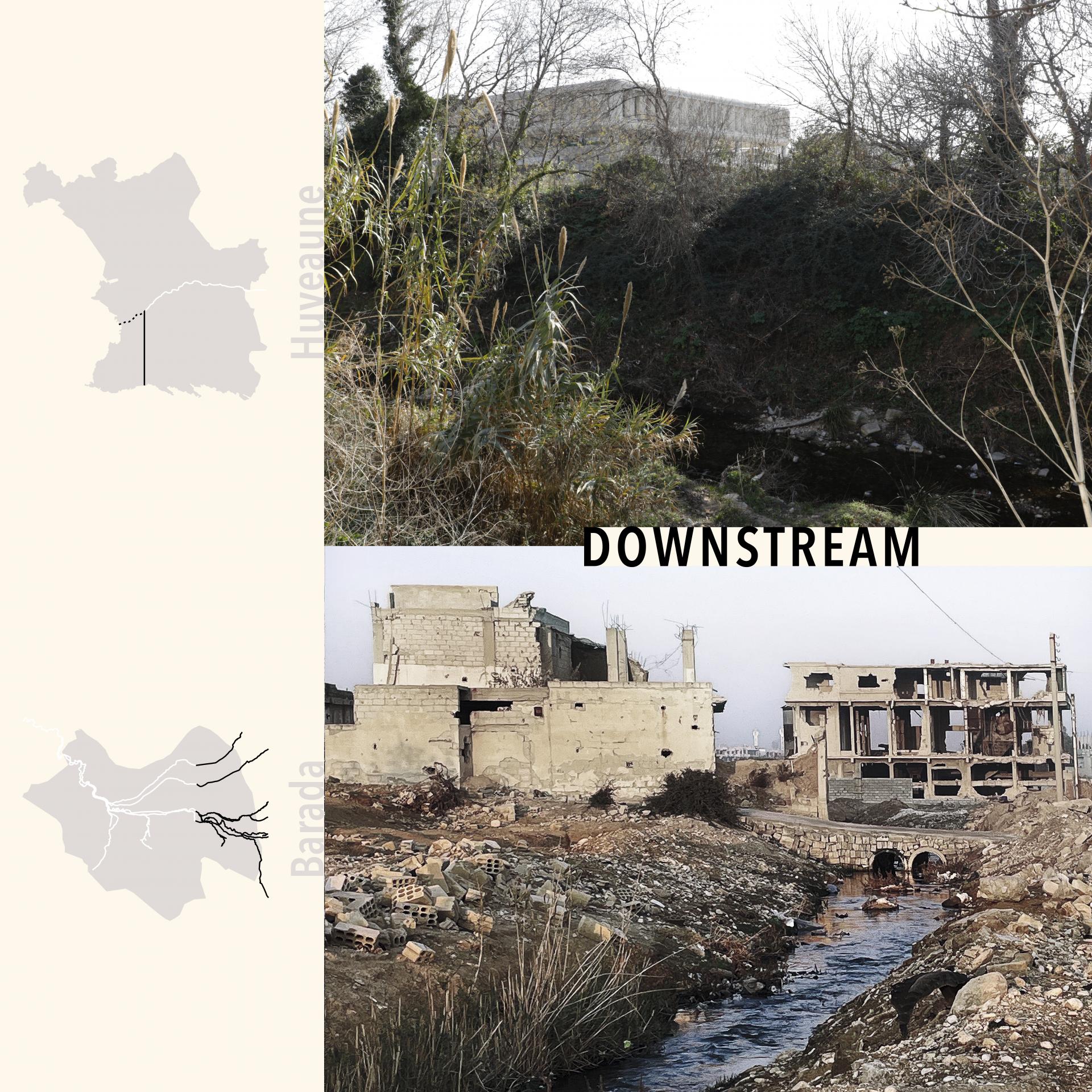
Downstream, the two rivers diverge into distinct trajectories. While the water of Huveaune disappears at the Pugette dam, where channels redirect its flow toward the Calanques National Park, Barada is confronted with the burdens of war in the outskirts of Damascus, where unregulated industrial wastewater, rubble and massive urban and ecological destruction diminish its flow and continuity.
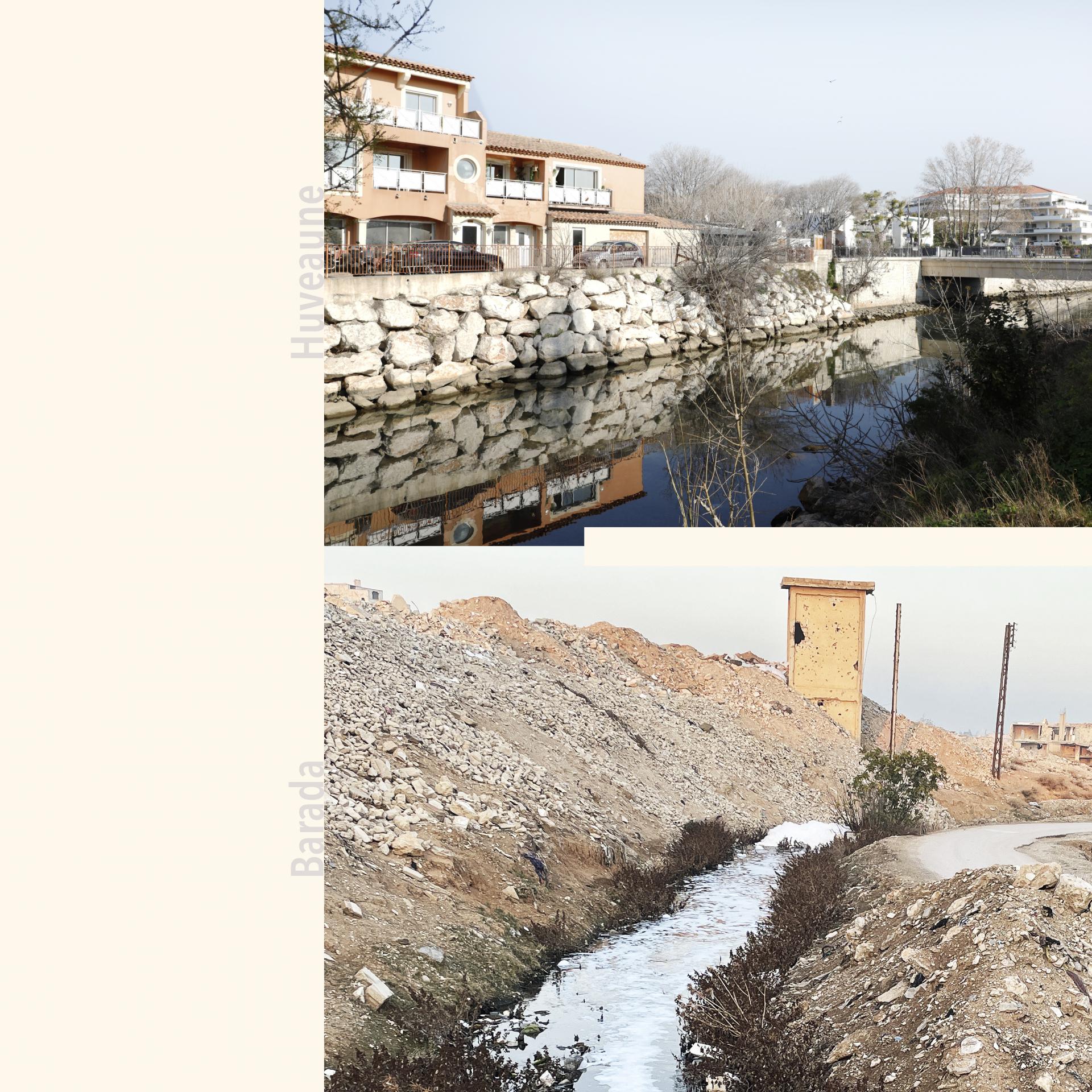
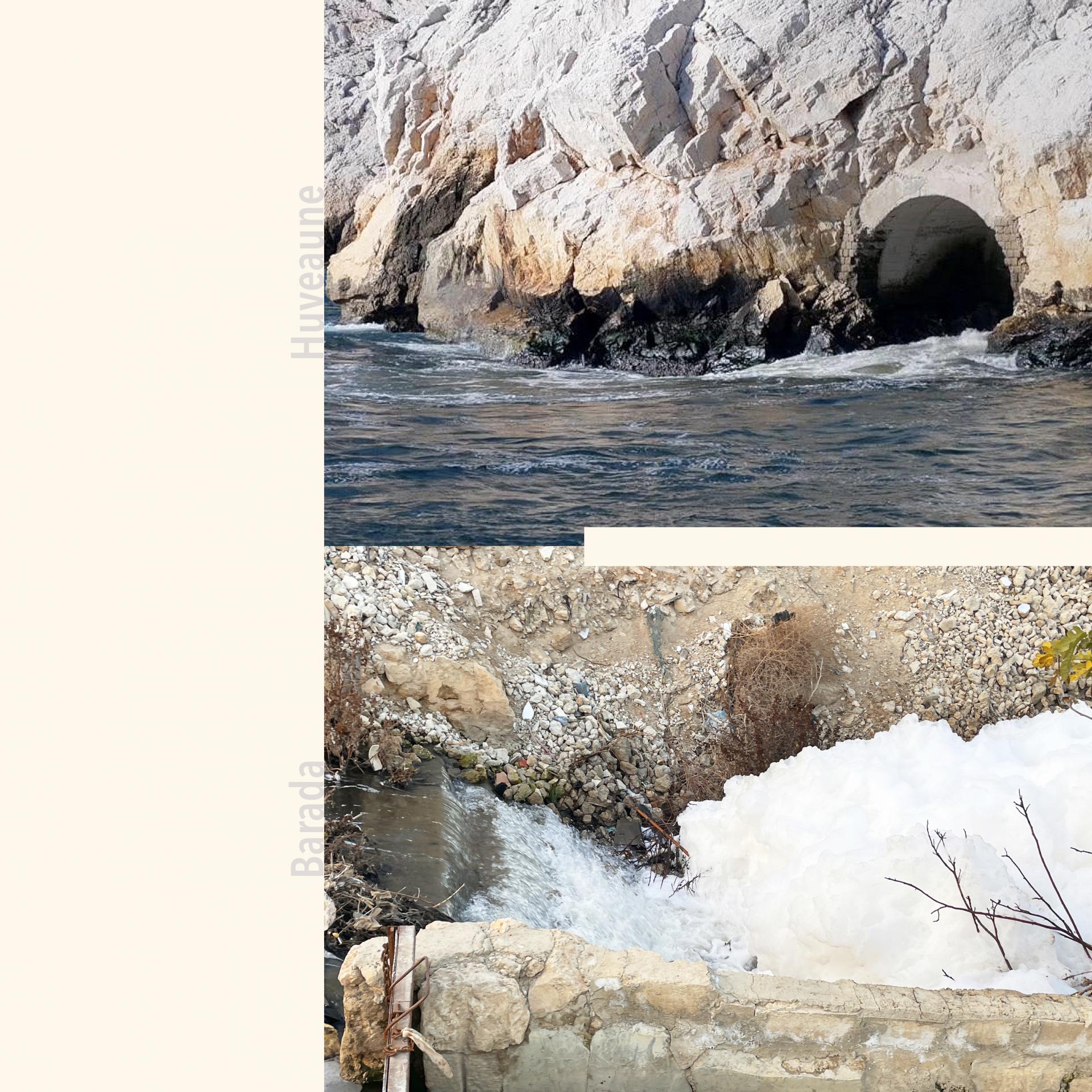
Both Barada and Huveaune today are composed of discontinuous spatial conditions that cannot be understood simply as ecological failure, but the material consequence of planning paradigms that prioritize efficiency and institutional rationality over socio-ecological continuity. By externalizing risk and privileging short-term urban protection, these systems gradually undermine the river’s capacity for self-regulation and adaptation. Restoration, therefore, should not be reduced to the riverbanks beautification or the re-naturalization of water flows. It requires rethinking the river as a shared ecological and political space, whose boundaries exceed technical infrastructures and administrative divisions.