The Venice Biennale And AI
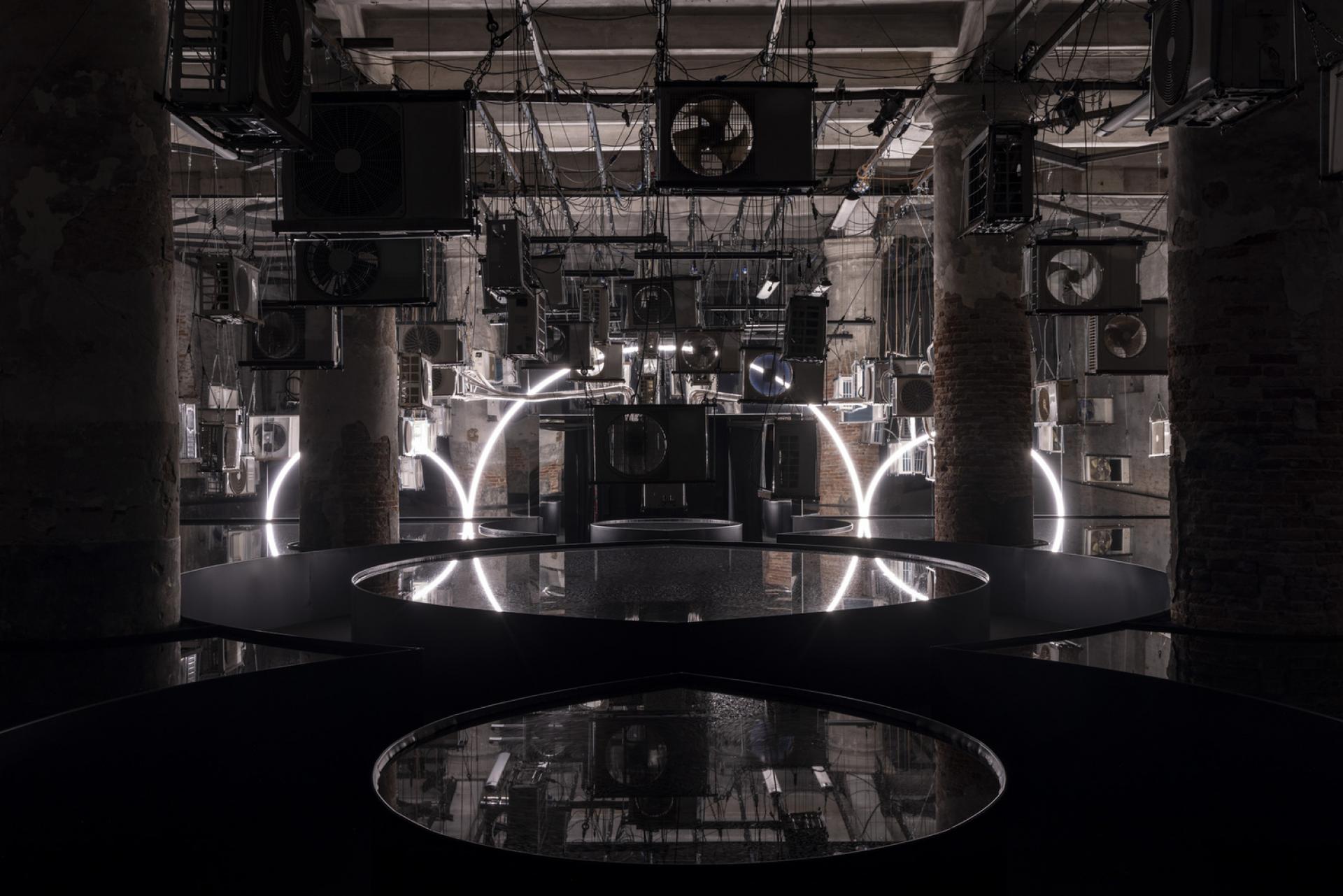
The Third Paradise Perspective - the Biennale Intro. Courtesy of La Biennale di Venezia. Image © Marco Zorzanello
In a couple of weeks, the 19th Venice Architecture Biennale will close its doors. Here is what AI – a major topic, hence the “Artifical” in the title – thinks about this year’s Biennale: The 2025 Venice Architecture Biennale, curated by Carlo Ratti under the theme “Intelligens. Natural. Artificial. Collective.”, offered visitors an expansive, multisensory exploration of architecture’s responses to global challenges.
At the same time, more collateral events were held than ever before. We were impressed by the launch of ABOUT – a bold and ambitious new large-format Architecture magazine, published in both English and Italian by the Italian branch of the multinational media heavyweight Hearst. The magazine focuses entirely on architecture, with each edition dedicated to a specific typology. Rightly and (un)surprisingly they kicked of the endeavour with 'The Collective'.
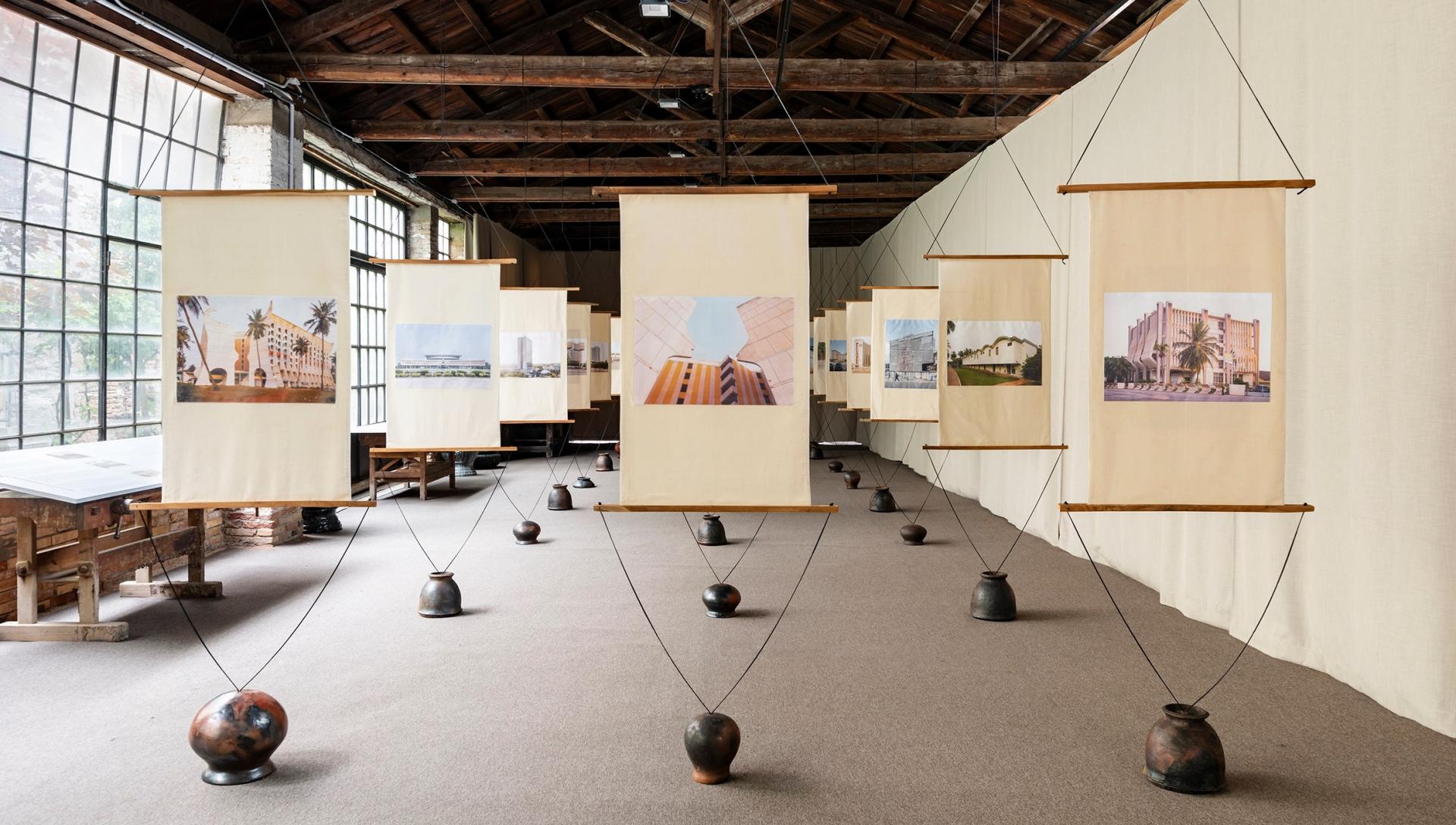
A view of the Togo Pavilion. © Matteo Losurdo
Several countries – including Azerbaijan, Oman, Qatar, and Togo – participated in the Biennale for the first time. We particularly enjoyed the Togo Pavilion, a beautifully designed yet simple photographic collection of the country’s nearly forgotten Modernist masterpieces. It reinforces our impression that the exhibitions from smaller countries are often among the most compelling contributions.
To write this review, we also experimented with several iterations on different AI engines to see which pavilions appeared most frequently in the results. This led to a highly subjective selection of the national pavilions – and, in the end, we found our own choices to be as subjective as those rendered by AI.
Among the pavilions highlighted was Bahrain’s, which (according to AI) received the Golden Lion for its sensitive, context-driven response to rising sea levels and resource scarcity. However, we were neither impressed by the AI’s explanation nor by the pavilion itself. It treats sea levels and resource scarcity only very peripherally, if at all. Rather, it and showcases a rather basic “air conditioning” system for public outdoor spaces. Other pavilions frequently mentioned by the AI included those of the Holy See (which also won an award), Serbia, Estonia, Bulgaria and Germany. All of them focus on specific questions of sustainability – whether through climate adaptation or novel reuse approaches – sometimes poetic (Serbia), sometimes tongue-in-cheek (Bulgaria, Estonia).
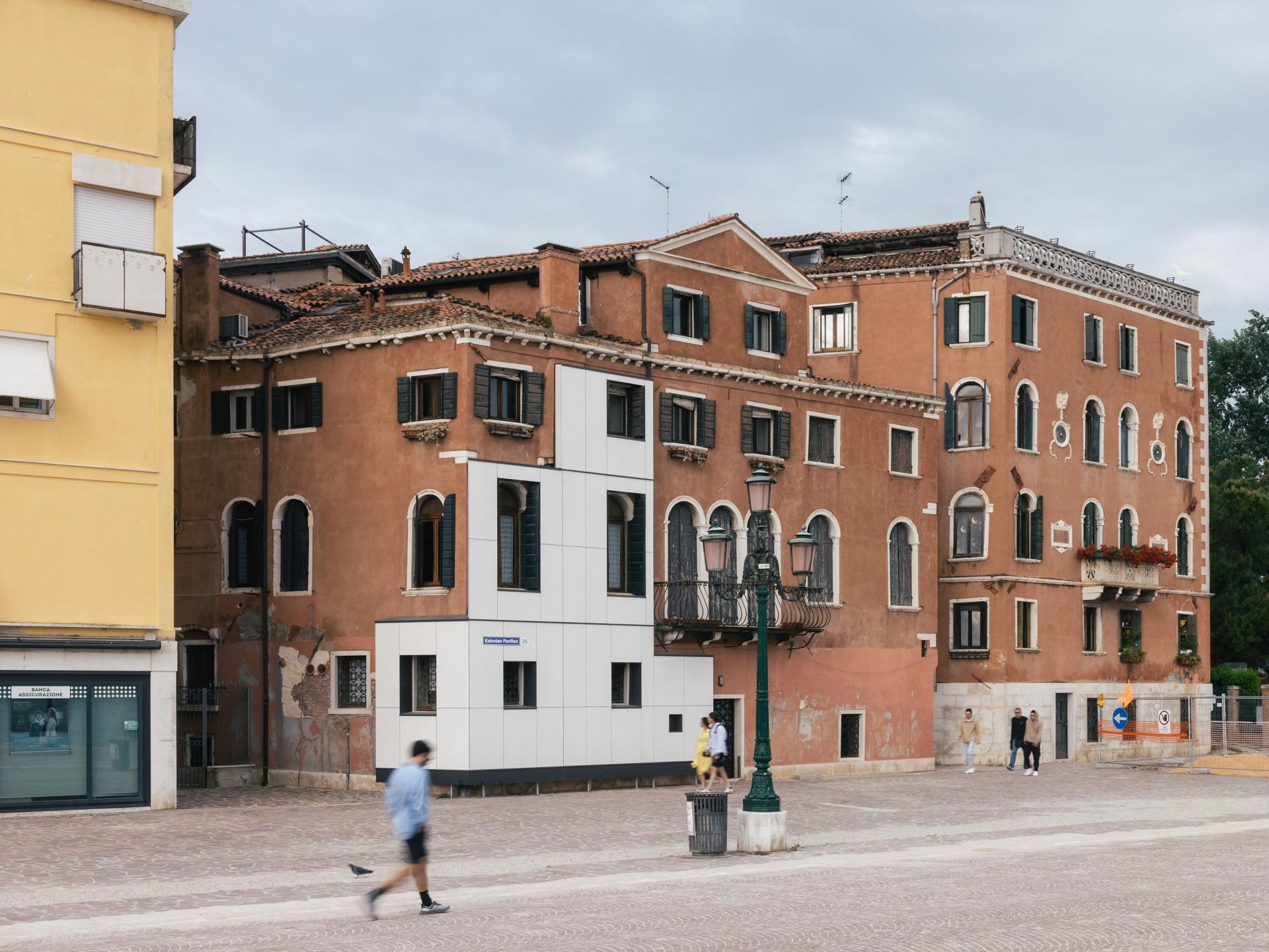
The Estonian Pavilion - A new insulation for a Venetian house on the Riva degli schiavoni. © Joosep Kivimäe
Rightfully, Artificial Intelligence also took note of the installation at the beginning of the main exhibition – the “Intro” section of the general exhibition stands out: Here, visitors walked through a simulated heatwave before entering cool exhibition halls, directly reflecting on climate adaptation—a motif recurrent throughout the Biennale. The central topics tackled ranged from artificial intelligence and nature’s fragility to collective action and pragmatic sustainability.
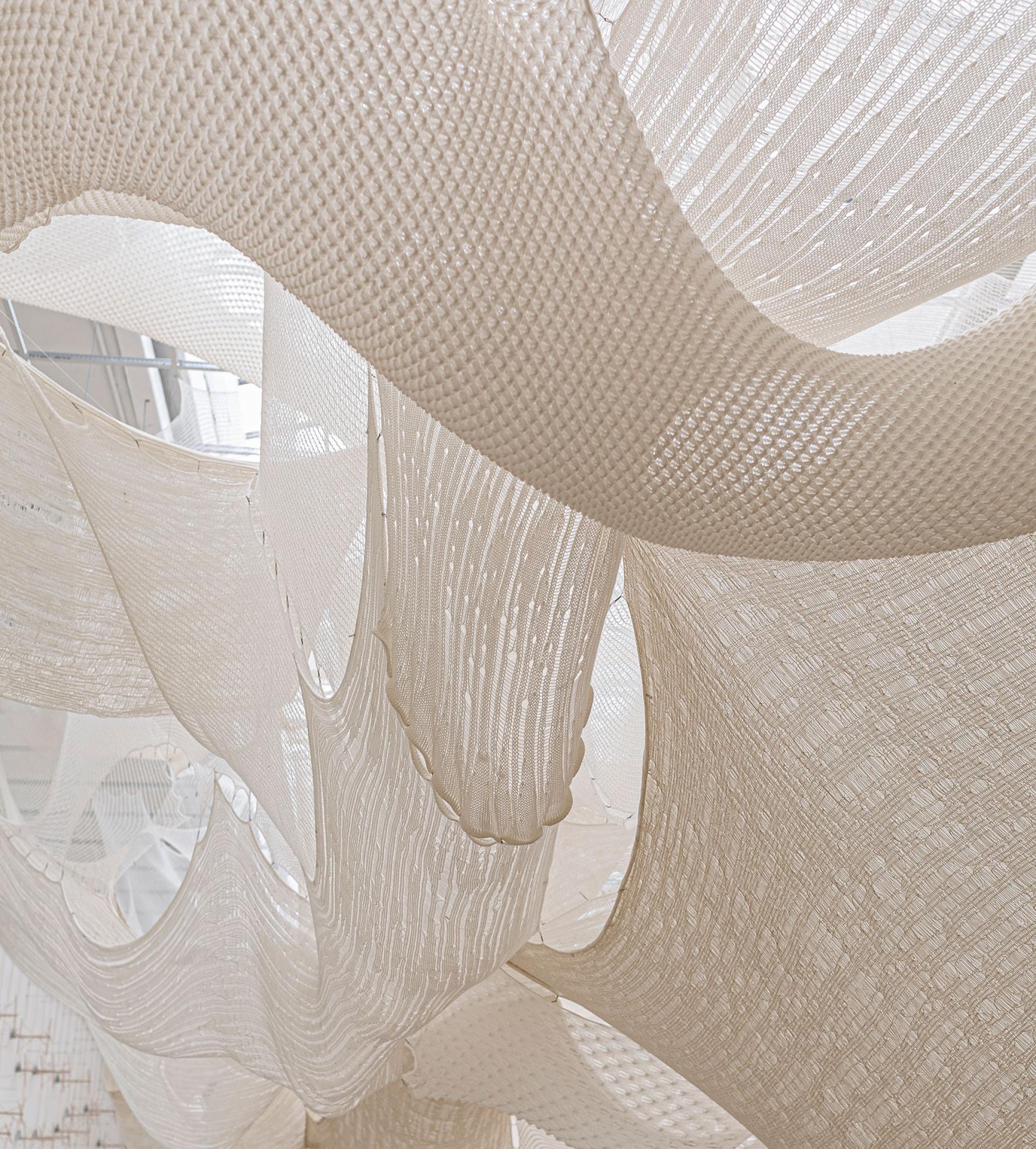
Human craft vs AI: In the Serbian Pavilion an exhibit crafted by designers are unwoven by algorithms until the space is empty. Image © Andres Ferro
Overall, the AI engines we queried produced a positive yet nuanced summary of the exhibition (We tested several models). Here is one take: Despite occasional criticisms regarding the show’s “information overload” and at times chaotic presentation, the Biennale succeeded in fostering optimistic, multidisciplinary dialogues. Whether through hands-on, immersive installations or reflective narratives, the 2025 Biennale challenged both experts and general visitors to rethink the possibilities of architecture in a rapidly changing world.
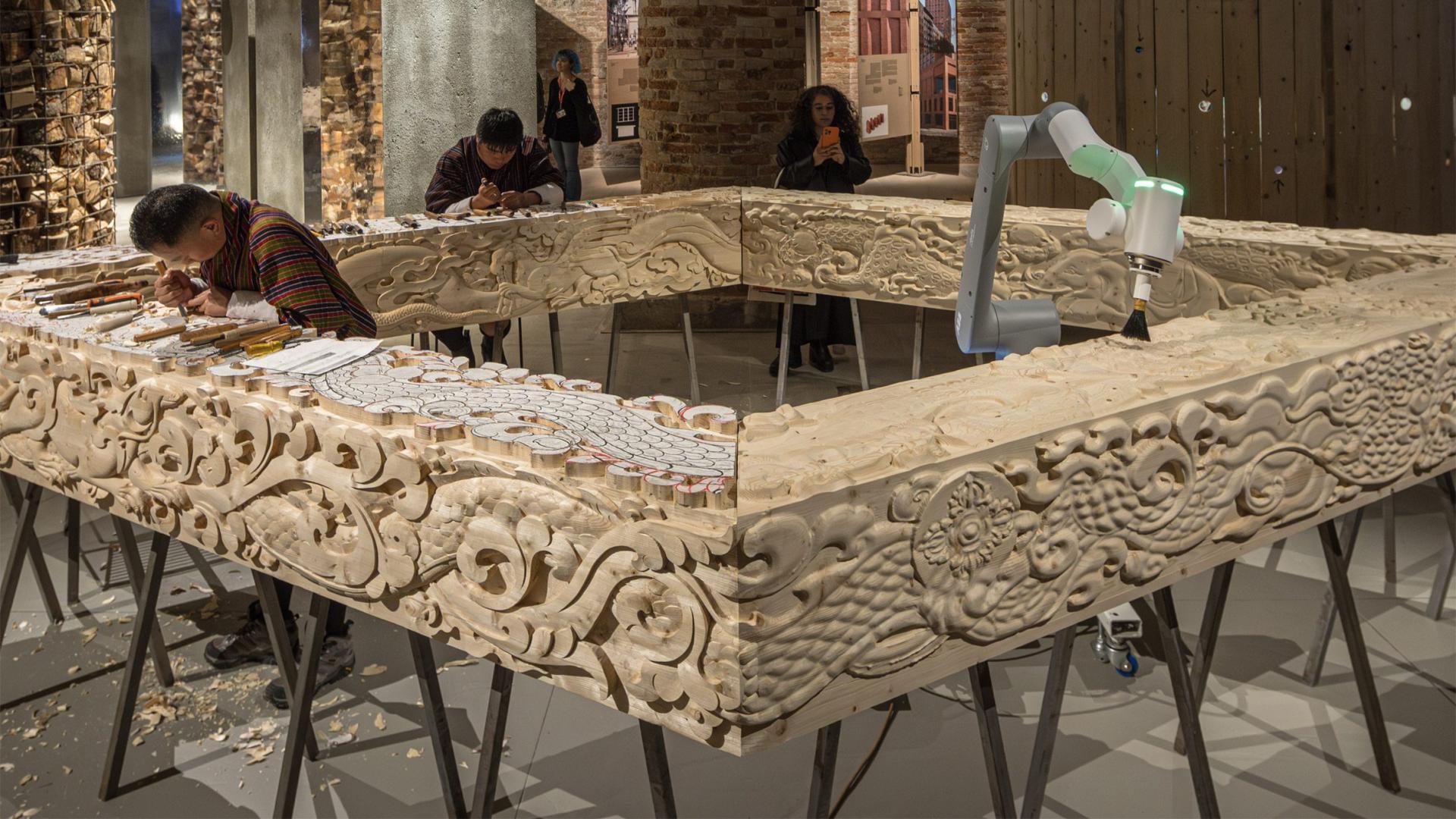
Human craft vs AI 2: Bhutanese craftsmen (left) train an AI robot (right). © Courtesy by Dezeen
What does all this tell us? On the one hand, everyone knows how immensely powerful these models have become. On the other hand, their output remains subjective. – based on the work of real people who walk through the Biennale, bump into each other, exchange views and finally make their opinions known on the world wide web where they are harvested by AI bots. Even if journalism (and almost everything else) may seem at risk from these mighty new tools, in this case the results remain, and rightly so, subjective. They depend on people, on us. After all, architecture is not an objective science. It is a craft, produced by humans, for humans. Let’s see what the Biennale in 2046 has to say.